
Introduction
Getting your family to sit down for a healthy dinner that everyone actually enjoys eating feels like winning the lottery. Between picky eaters, busy schedules, and the constant pressure to provide nutritious meals, weeknight dinners can become incredibly stressful. The good news? Easy healthy weeknight dinners for family don’t have to be complicated, time-consuming, or bland. These five kid-friendly recipes prove that nutritious food can be absolutely delicious and simple enough to prepare on even your busiest evenings. Each meal comes together in 25 minutes or less, uses wholesome ingredients your family recognizes, and tastes genuinely good—not like you’re forcing vegetables down anyone’s throat. What makes these dinners special is that they’re designed specifically with kids in mind. The flavours aren’t too intense, the textures are familiar yet interesting, and there’s enough variety that even the pickiest eaters find something to enjoy. These aren’t the kinds of dinners you dread preparing. Instead, they’re the meals your family will actually request. Once you discover these kid-friendly, healthy weeknight dinners, you’ll stop stressing about what’s for dinner and start feeling confident that you’re feeding your family well.
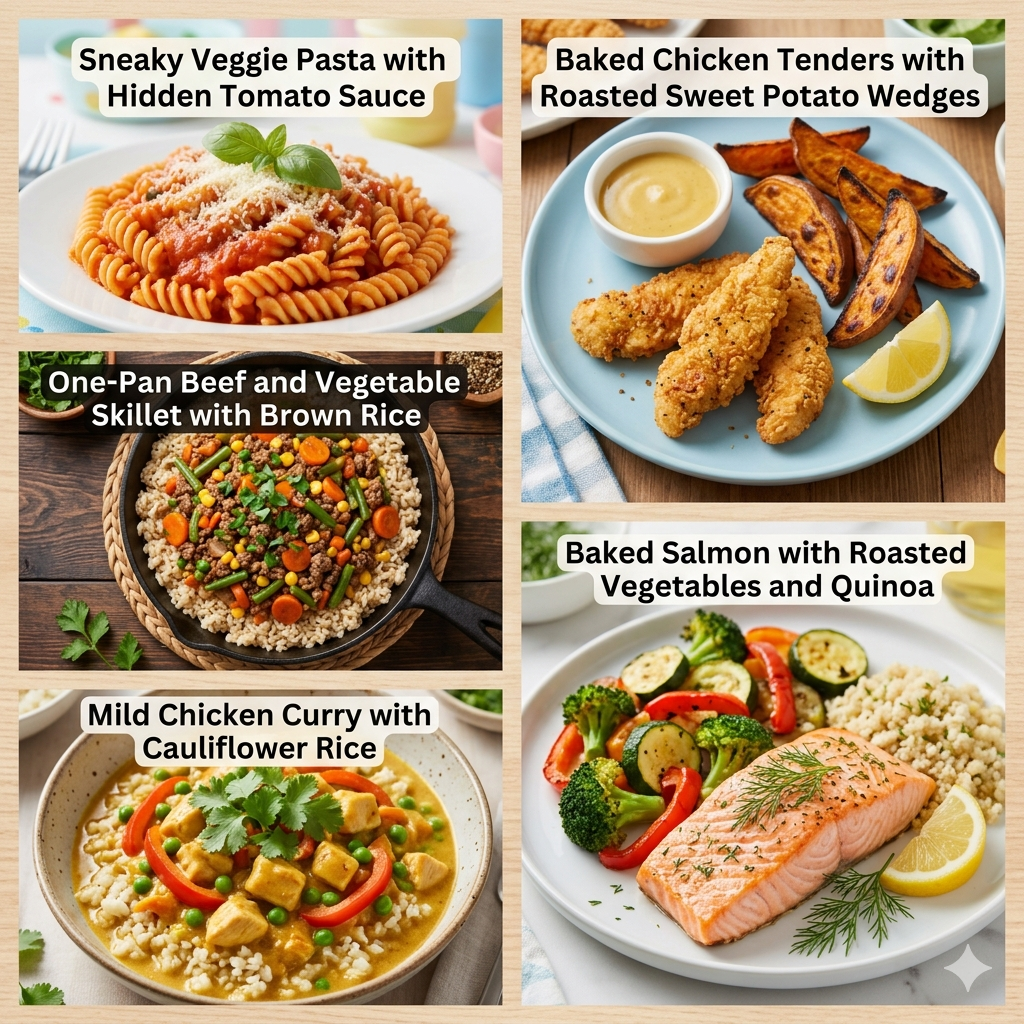
1. Sneaky Veggie Pasta with Hidden Tomato Sauce
This clever pasta sauce looks like a traditional tomato sauce, but it’s secretly loaded with vegetables. Kids who refuse vegetables on their plate will happily devour them when they’re blended into a delicious pasta sauce they love.
Ingredients
- 12 ounces pasta (any shape, whole wheat works great)
- 2 tablespoons olive oil
- 1 medium onion, roughly chopped
- 3 cloves garlic, minced
- 2 medium carrots, roughly chopped
- 2 cups fresh spinach
- 1 red bell pepper, roughly chopped
- 2 cans (28 ounces total) crushed tomatoes
- 1 tablespoon tomato paste
- 1 teaspoon dried basil
- 1 teaspoon dried oregano
- 1/2 teaspoon sugar (to balance acidity)
- Salt and freshly ground black pepper to taste
- Parmesan cheese for serving
- Fresh basil for garnish (optional)
Instructions
Bring a large pot of salted water to a boil and cook the pasta according to package directions. Whilst the pasta cooks, heat olive oil in a large saucepan over medium heat. Add the chopped onion and cook for 3 minutes until softened. Add the minced garlic and cook for another 30 seconds until fragrant. Add the chopped carrots, spinach, and bell pepper, cooking for 3-4 minutes until everything is softened and the spinach has wilted. Pour in the crushed tomatoes and tomato paste, stirring well. Add the dried basil, oregano, and sugar. Simmer for 8-10 minutes, stirring occasionally. Using an immersion blender, puree the sauce until completely smooth—this hides all the vegetable pieces beautifully. Alternatively, carefully transfer the sauce to a regular blender in batches, blend until smooth, then return to the pan. Taste and adjust seasoning with salt and pepper. Drain the cooked pasta and toss with the sauce. Serve topped with grated Parmesan cheese. Your kids will have no idea they’re eating four different vegetables in every bite.
2. Baked Chicken Tenders with Roasted Sweet Potato Wedges
Crispy on the outside, tender on the inside, these homemade chicken tenders are infinitely better than frozen versions. Paired with naturally sweet roasted sweet potatoes, this meal feels indulgent whilst being genuinely nutritious.
Ingredients
For the Chicken Tenders
- 1.5 pounds boneless, skinless chicken breasts
- 1/2 cup whole wheat panko breadcrumbs
- 1/4 cup grated Parmesan cheese
- 1 teaspoon garlic powder
- 1 teaspoon paprika
- 1/2 teaspoon black pepper
- 1/4 teaspoon salt
- 1 large egg
- 2 tablespoons milk
- Cooking spray or light olive oil
For the Sweet Potato Wedges
- 2 medium sweet potatoes
- 2 tablespoons olive oil
- 1/2 teaspoon ground cinnamon
- 1/4 teaspoon salt
- Pinch of cayenne pepper (optional)
Instructions
Preheat your oven to 400°F (200°C). Line two baking sheets with parchment paper. Cut the sweet potatoes into wedges, toss with olive oil, cinnamon, salt, and cayenne if using. Spread them in a single layer on one baking sheet and place in the oven. Cut the chicken breasts lengthwise into strips about 1 inch wide. In a shallow bowl, whisk together the panko, Parmesan, garlic powder, paprika, black pepper, and salt. In another shallow bowl, whisk together the egg and milk. Dip each chicken strip in the egg mixture, then coat thoroughly with the breadcrumb mixture. Place on the second baking sheet and lightly spray with cooking spray. Bake both sheets for 18-20 minutes until the chicken is cooked through and the sweet potatoes are tender and caramelised at the edges. The chicken should register 165°F on a meat thermometer. Serve the tenders and wedges hot, with a side of your family’s favourite dipping sauce—ketchup, ranch dressing, or honey mustard all work beautifully.
3. One-Pan Beef and Vegetable Skillet with Brown Rice
This comforting one-pan meal brings together lean ground beef and wholesome vegetables in a savoury sauce that clings beautifully to brown rice. It’s hearty, satisfying, and cleanup is minimal.
Ingredients
- 1 pound lean ground beef
- 2 cups cooked brown rice (prepare ahead or use quick-cook rice)
- 2 tablespoons olive oil
- 1 medium onion, diced
- 2 cloves garlic, minced
- 2 medium carrots, diced
- 1 cup green beans, cut into 1-inch pieces
- 1 cup corn kernels (fresh or frozen)
- 1 can (14.5 ounces) diced tomatoes
- 2 tablespoons low-sodium soy sauce
- 1 tablespoon tomato paste
- 1 teaspoon dried thyme
- 1/2 teaspoon black pepper
- Salt to taste
- Fresh parsley for garnish
Instructions
Heat olive oil in a large skillet over medium-high heat. Add the ground beef and cook, breaking it apart with a spoon, until browned and cooked through, about 5-6 minutes. Drain any excess fat if necessary. Add the diced onion and cook for 2-3 minutes until softened. Add the minced garlic and cook for 30 seconds until fragrant. Add the diced carrots, green beans, and corn, stirring well. Cook for 3-4 minutes until the vegetables begin to soften. Stir in the diced tomatoes, soy sauce, tomato paste, thyme, and black pepper. Bring to a simmer and cook for 5-6 minutes, stirring occasionally, until the sauce thickens slightly. Taste and adjust seasoning with salt as needed. Serve over cooked brown rice, garnished with fresh parsley. This meal is naturally balanced with protein, whole grains, and vegetables—everything a growing child needs.
4. Mild Chicken Curry with Cauliflower Rice
This creamy, gently spiced curry introduces kids to flavourful global cuisine without being overwhelming. The coconut milk makes it naturally creamy and delicious, whilst the cauliflower rice keeps it nutritious without being heavy.
Ingredients
- 1.5 pounds boneless, skinless chicken breasts, diced
- 2 tablespoons coconut oil or olive oil
- 1 medium onion, diced
- 3 cloves garlic, minced
- 1 tablespoon fresh ginger, minced
- 1.5 tablespoons mild curry powder
- 1 teaspoon ground cumin
- 1 red bell pepper, diced
- 1 cup frozen peas
- 1 can (13.5 ounces) coconut milk
- 1 cup low-sodium chicken broth
- 1 tablespoon honey
- Salt and black pepper to taste
- 3 cups cauliflower rice (fresh or frozen)
- Fresh cilantro for garnish
Instructions
Heat the coconut oil in a large skillet over medium-high heat. Add the diced chicken and cook until golden on the outside, about 4-5 minutes. Don’t worry about it being completely cooked through yet. Transfer to a plate. In the same skillet, add the diced onion and cook for 2-3 minutes until softened. Add the minced garlic and ginger, cooking for 30 seconds until fragrant. Stir in the curry powder and cumin, cooking for another 30 seconds to bloom the spices. Add the diced bell pepper and cook for 2 minutes. Pour in the coconut milk and chicken broth, stirring well. Return the chicken to the skillet along with the frozen peas and honey. Simmer for 8-10 minutes until the chicken is cooked through and the sauce has thickened slightly. Taste and adjust seasoning with salt and pepper. Meanwhile, cook the cauliflower rice according to package directions. Serve the curry over the cauliflower rice, garnished with fresh cilantro. The curry’s mild flavouring and creamy sauce appeal to kids whilst the ginger and spices satisfy adult palates.
5. Baked Salmon with Roasted Vegetables and Quinoa
Salmon is one of the healthiest proteins you can offer your family, and this simple preparation makes it absolutely fool-proof. The lemon and herbs brighten the fish beautifully whilst the roasted vegetables add nutrition and colour.
Ingredients
For the Salmon
- 4 salmon fillets (5-6 ounces each)
- 2 tablespoons olive oil
- 2 cloves garlic, minced
- Zest of 1 lemon
- Juice of 1/2 lemon
- 1 teaspoon dried dill or fresh dill
- 1/4 teaspoon salt
- 1/8 teaspoon black pepper
For the Roasted Vegetables
- 2 cups broccoli florets
- 1 cup diced zucchini
- 1 cup diced bell peppers (any colour)
- 2 tablespoons olive oil
- 1/2 teaspoon garlic powder
- Salt and black pepper to taste
For Serving
- 2 cups cooked quinoa
- Lemon wedges
- Fresh dill for garnish
Instructions
Preheat your oven to 400°F (200°C). On a large baking sheet, toss the broccoli, zucchini, and bell peppers with olive oil, garlic powder, salt, and pepper. Spread in a single layer and place in the oven. In a small bowl, combine the minced garlic, lemon zest, lemon juice, dill, salt, and pepper with the olive oil. After the vegetables have roasted for 10 minutes, push them to the sides of the baking sheet. Place the salmon fillets skin-side down in the centre of the sheet and brush generously with the lemon-garlic mixture. Return to the oven and bake for 10-12 minutes until the salmon flakes easily with a fork and the vegetables are tender and slightly caramelised. Serve the salmon and vegetables alongside cooked quinoa. Drizzle with extra lemon juice and garnish with fresh dill. This meal is packed with omega-3 fatty acids, protein, and colourful vegetables—everything growing bodies need.
Tips for Getting Kids to Eat Healthy Dinners
Involve Kids in Cooking Kids are far more likely to eat meals they’ve helped prepare. Even young children can tear lettuce, stir sauces, or arrange vegetables on a baking sheet. This involvement makes them invested in the outcome and teaches valuable cooking skills.
Serve Meals Family-Style Place all the components on the table and let family members serve themselves. This gives kids control over their portions and encourages them to try new foods without pressure. Kids are more willing to eat vegetables when they’ve chosen them themselves.
Pair New Foods with Familiar Ones When introducing new recipes or ingredients, include at least one familiar element your child already enjoys. This reduces anxiety about the meal and ensures they have something they definitely like.
Respect Food Preferences Not every child will love every meal, and that’s okay. Offer the healthy dinner you’ve prepared along with something simple they can eat if they truly dislike the main dish. Forcing kids to eat foods they despise creates negative associations with healthy eating.
Make Healthy Food Look Appealing Colourful plates with variety are more visually interesting to kids. The bright orange sweet potatoes, green broccoli, and pink salmon make the meal naturally appealing without any effort.
Limit Pressure Research shows that pressuring kids to eat specific foods actually backfires. Instead, regularly offer healthy meals without comment and let your children decide whether and how much to eat. Most kids will eventually try new foods when they feel safe.
Storage and Meal Prep Instructions
All five of these dinners keep beautifully in the refrigerator for 3-4 days when stored in airtight containers. The pasta sauce is actually better after a day when flavours have melded together. The chicken tenders lose some crispness after storage but still taste delicious—reheat gently in a 325°F oven for 5-7 minutes to restore some crispness.
The beef and vegetable skillet, curry, and salmon with vegetables all freeze exceptionally well for up to one month in freezer-safe containers. The quinoa and brown rice can be prepared ahead and refrigerated for 3-4 days, or frozen for up to one month.
For busy weekdays, prepare components ahead: cook grains, chop vegetables, and marinate proteins the day before. When you arrive home, assembly and cooking takes just 20-25 minutes. This prep-ahead strategy makes weeknight dinners far less stressful.
Reheat gently on the stovetop over medium heat with a splash of water or broth, stirring occasionally, until warmed through. Microwaving works for quick reheating, but stovetop methods preserve texture and taste better.
Frequently Asked Questions
How can I adapt these recipes for children with food allergies? All five recipes are naturally gluten-free or easily adaptable by using gluten-free pasta or grains. For nut allergies, these recipes contain no nuts. For dairy allergies, skip the Parmesan cheese topping or use dairy-free alternatives. Fish allergies require skipping the salmon recipe, but the other four are excellent alternatives.
What if my child refuses vegetables? The sneaky veggie pasta is your best weapon—blended vegetables are completely hidden. The one-pan beef skillet allows you to serve vegetables separately so kids can eat around them if they choose. Keep serving vegetables alongside meals without pressure. Research shows it takes 10-15 exposures to a new food before children accept it.
Can these recipes be made dairy-free or vegan? The chicken tenders, beef skillet, curry, and salmon recipes are naturally dairy-free or easily adapted by skipping cheese. The sneaky veggie pasta can use dairy-free Parmesan alternatives. For fully vegan versions, replace chicken and beef with plant-based proteins like tofu or legumes, and substitute fish with hearty vegetables.
How do I know when these proteins are fully cooked and safe for my family? Chicken should reach an internal temperature of 165°F (74°C) on a meat thermometer. Ground beef should be brown throughout with no pink remaining. Salmon should flake easily with a fork and appear opaque throughout. Invest in an inexpensive meat thermometer for peace of mind and food safety.