Introduction
Easy hanami dango recipe brings a taste of Japan right to your kitchen with these adorable three-colored dumplings that celebrate spring. Hanami means cherry blossom in Japanese, and dango are traditional sweet dumplings that have been enjoyed for centuries. These petite treats are typically made during spring festival season, and once you taste them, you’ll understand why they’re so beloved.
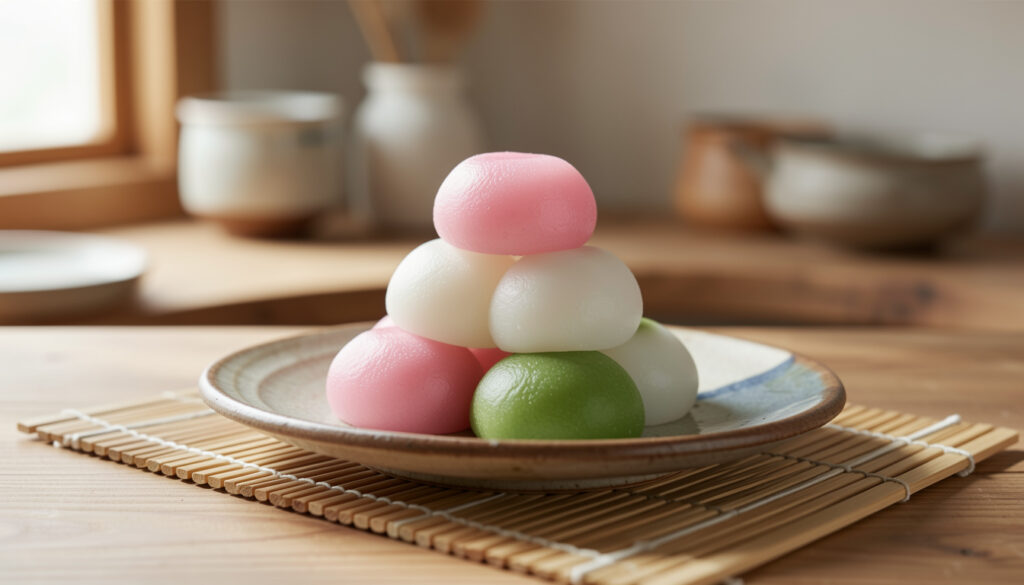
What makes hanami dango special is both the delicate flavors and the stunning presentation. Three perfectly stacked dumplings in soft pink, white, and green represent cherry blossoms, snow, and fresh leaves—the essence of Japanese spring captured in three little bites. They look elegant enough for a tea ceremony but are simple enough to make on a lazy afternoon.
This easy homemade hanami dango recipe uses basic ingredients and straightforward techniques. You don’t need special equipment or years of cooking experience. Just a few pantry staples, a bit of patience, and about 30 minutes, and you’ve got something that tastes like it came from a Japanese confectionery shop. Whether you’re celebrating spring, exploring Japanese desserts, or simply want something beautiful and delicious, hanami dango delivers on all fronts.
Why You’ll Love This Recipe
- Takes just 30 minutes to make from start to finish
- Uses simple, accessible ingredients available at most grocery stores
- Creates beautiful, Instagram-worthy presentation without complicated decorating
- Three different flavors in one dessert—something for every taste preference
- Naturally vegetarian and can easily be made vegan
- Perfect for spring celebrations, tea parties, or whenever you need something special
- Stores well for several days, making it ideal for meal prep
Ingredients (Makes 12 dango, serves 4–6)
For the Dough:
- 1 cup mochiko flour (sweet rice flour)
- ¼ cup tapioca starch or cornstarch
- ⅓ cup granulated sugar
- ¾ cup hot water
- Pinch of salt
For the Coloring:
- ¼ teaspoon pink food coloring (for cherry blossom)
- ¼ teaspoon matcha powder (for green)
- White dough needs no coloring
For the Glaze:
- ¼ cup granulated sugar
- ¼ cup water
- 1 tablespoon soy sauce
- 1 teaspoon cornstarch
- 1 teaspoon water (for slurry)
- ½ teaspoon mirin (optional, for shine)
For Serving:
- Skewers (bamboo sticks or small dowels)
- Fresh mint leaves (optional garnish)
Substitution Ideas:
- Use natural food colorings like beet juice for pink or spinach puree for green
- Skip the glaze and serve with a light dusting of powdered sugar instead
- Make all one color if you prefer, or use different color combinations
- Create chocolate dango by adding cocoa powder to one portion
- Use ube or taro powder for a different flavor profile
Equipment Needed
- Medium mixing bowl
- Whisk
- Microwave-safe bowl
- Silicone spatula
- Small bowls (for coloring each portion)
- Bamboo sticks or skewers
- Small saucepan (for glaze)
- Fork or small whisk (for glaze)
- Parchment paper
- Baking sheet
- Cutting board
Step-by-Step Instructions: How to Make Easy Hanami Dango Recipe
Make the Base Dough (8 minutes)
In a medium bowl, whisk together mochiko flour, tapioca starch, sugar, and salt. Pour in hot water gradually while stirring with a silicone spatula. The mixture will be quite wet and sticky at first—that’s exactly how it should be. Keep stirring until you have a smooth, thick dough with no lumps.
Transfer this dough to a microwave-safe bowl and microwave on high for 1–2 minutes. The dough will change from shiny and wet to opaque and thick. Give it a stir, then microwave for another 30–60 seconds if needed. It’s done when it holds together and looks slightly translucent.
Let the cooked dough cool for about 3–5 minutes until you can handle it comfortably. It should still be warm but not burning hot.
Divide and Color the Dough (5 minutes)
Divide your cooled dough into three equal portions. Leave one portion plain white—this represents snow. Into the second portion, mix in a few drops of pink food coloring, kneading gently until the color is evenly distributed and you have a soft pink. This represents cherry blossoms.
Into the third portion, sift in about ¼ teaspoon matcha powder and knead until you have a uniform pale green color. This represents fresh spring leaves. If the dough gets too dry while mixing colors, add a few drops of water.
Shape the Dango (10 minutes)
Lightly wet your hands to prevent sticking. Take a small amount of the white dough, about the size of a cherry, and roll it between your palms to create a smooth ball. Repeat with all the white dough, creating about 4 balls.
Do the same with the pink dough, creating 4 pink balls, and the green dough, creating 4 green balls. You should end up with about 12 balls total.
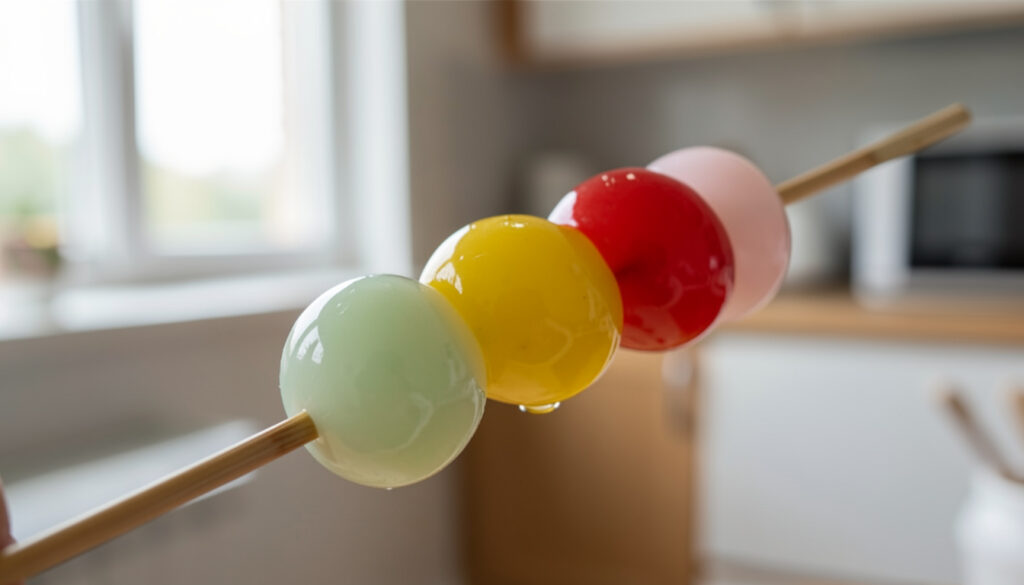
Push a bamboo stick or skewer through the center of each ball lengthwise. Then stack the balls on the stick in the traditional order: pink on bottom, white in the middle, green on top. The balls should be touching but not squishing each other.
Make the Glaze (5 minutes)
In a small saucepan, combine sugar and water, heating over medium heat until the sugar dissolves. Add soy sauce and bring to a gentle simmer. Mix cornstarch with 1 teaspoon water to create a slurry, then stir it into the simmering glaze. Cook for about 1 minute until the glaze thickens and becomes slightly translucent.
Add mirin if using—it adds a beautiful shine. Let the glaze cool for about 2 minutes so it’s warm but not hot.
Glaze and Serve (2 minutes)
Using a small brush or spoon, brush the glaze over the dango, coating all the balls on each skewer. Place them on a parchment-lined baking sheet and let the glaze set for a few minutes.
Serve at room temperature, optionally garnished with a small fresh mint leaf tucked between the balls. The hanami dango are best enjoyed on the day they’re made, but they keep well in the refrigerator.
Expert Tips for Perfect Results
Don’t skip the microwaving step. This gelatinizes the starch and creates the proper texture. Raw dough won’t hold together properly.
Keep your hands slightly damp. Not soaking wet, but lightly dampened. This prevents sticking without making the dough too wet.
Make balls roughly equal in size. They don’t have to be perfect, but similar sizes look better on the skewer and cook more evenly.
Stack in the traditional order. Pink, white, green from bottom to top represents the progression of spring.
Use a light touch with the glaze. A thin, even coat looks best. Too much glaze makes them shiny but can make them stick together.
Serve the same day if possible. They’re best enjoyed fresh when the dango are still slightly chewy and the glaze is shiny.
Variations on This Easy Hanami Dango Recipe
Chocolate Dango: Replace matcha powder with cocoa powder for a chocolate layer instead of green.
All-Matcha Version: Use matcha powder in different concentrations to create three shades of green—light, medium, and dark.
Strawberry Flavor: Add strawberry powder or freeze-dried strawberry powder to the pink dough for fruity flavor.
Mango & Coconut: Create orange dough with mango powder and white dough with coconut powder for tropical hanami dango.
Purple & Gold: Use ube powder for purple and turmeric for golden yellow dough for a different color palette.
What to Serve With Easy Hanami Dango
Green Tea: The traditional pairing—serve with hot matcha tea or cold jasmine green tea.
Sweet Red Bean Soup: A warm, slightly sweet soup pairs beautifully with the dango.
Light Fruit Sauce: Drizzle with mango puree or passion fruit sauce for added flavor dimension.
Fresh Fruit: Serve alongside fresh strawberries, lychees, or mandarin oranges for a spring presentation.
Whipped Cream: A small dollop of whipped cream offers a cool contrast to the soft dumplings.
Pairs well with: Spring tea parties, Japanese-themed dinners, celebration meals, afternoon snacks, and cultural events.
Storage and Reheating Tips
Fresh: Best enjoyed within a few hours of making while the dango are still chewy and the glaze is fresh.
Refrigerator: Store in an airtight container for up to 3 days. They firm up as they cool but still taste delicious.
Freezing: Freeze on a baking sheet for 2 hours, then transfer to freezer bags for up to 1 month. Thaw in the refrigerator before serving.
No Reheating Recommended: These are best served at room temperature or chilled. The texture becomes tough if warmed.
Food Safety: Store in the refrigerator at 40°F or below. These contain no eggs but use glutinous rice flour. Consume within 3 days for best quality.
Frequently Asked Questions
Can I use regular flour instead of mochiko? Not really. Regular flour creates a different texture—mochiko’s starch content is what gives dango their characteristic chewiness.
What if I can’t find matcha powder? You can use green tea powder, spinach powder, or even a tiny amount of green food coloring. The flavor will be slightly different but still good.
Can I make these ahead for a party? Yes! Make them up to 3 days ahead and refrigerate. They’re actually fine served cold straight from the fridge.
Are these gluten-free? Yes! Mochiko flour is gluten-free. Just ensure your other ingredients like soy sauce are certified gluten-free.
What if my dough is too sticky? Let it cool longer—it firms up as it cools. If it’s still too sticky, dust your hands and work surface with cornstarch.
Nutrition Information (Per Serving)
Based on 12 dango divided into 4 servings
- Calories: 95–110
- Fat: 0–0.5g
- Carbohydrates: 23–25g
- Fiber: 0g
- Protein: 0.5–1g
- Sodium: 85–95mg
Note: Nutrition varies based on glaze used. This is an estimate.
Quick Recipe Card Summary
Easy Hanami Dango Recipe
Prep Time: 10 minutes Cook Time: 8 minutes Assembly Time: 12 minutes Total Time: 30 minutes Servings: 4–6 (makes 12 dango) Calories per piece: ~105
Ingredients:
For Dough:
- 1 cup mochiko flour
- ¼ cup tapioca starch
- ⅓ cup granulated sugar
- ¾ cup hot water
- Pinch of salt
- Pink food coloring (¼ tsp)
- Matcha powder (¼ tsp)
For Glaze:
- ¼ cup granulated sugar
- ¼ cup water
- 1 tablespoon soy sauce
- 1 teaspoon cornstarch
- 1 teaspoon water
Quick Instructions:
- Mix mochiko flour, tapioca starch, sugar, and salt. Add hot water and stir until smooth.
- Microwave 1–2 minutes until dough becomes opaque and thick. Cool 3–5 minutes.
- Divide dough into three portions. Keep one white, color one pink, one green with matcha.
- Roll each portion into 4 balls (12 total).
- Stack three balls (pink, white, green) on each skewer.
- Heat sugar and water until dissolved. Add soy sauce. Thicken with cornstarch slurry.
- Brush glaze over dango. Let set 2 minutes.
- Serve at room temperature or chilled.
Easy hanami dango recipe proves that you don’t need to travel to Japan to enjoy authentic Japanese desserts. With just a few simple ingredients and basic techniques, you can create these beautiful, delicate dumplings that celebrate the essence of spring. The combination of soft, chewy texture and three distinct flavors makes every bite feel special.
What makes hanami dango truly magical is how they represent a moment in time—the fleeting beauty of cherry blossoms in spring. Every time you make them, you’re connecting to a centuries-old Japanese tradition. Your friends and family will be amazed that you made something so beautiful and authentic at home.
Whether you’re exploring Japanese cuisine, celebrating spring, or simply want a dessert that’s as beautiful as it is delicious, hanami dango deliver. Once you master this basic recipe, you can experiment with different colors and flavors. Each version is a work of edible art that brings joy to anyone who enjoys it.